
找到你爱的地方然后搬到那里Find the Place You Love Then Move There
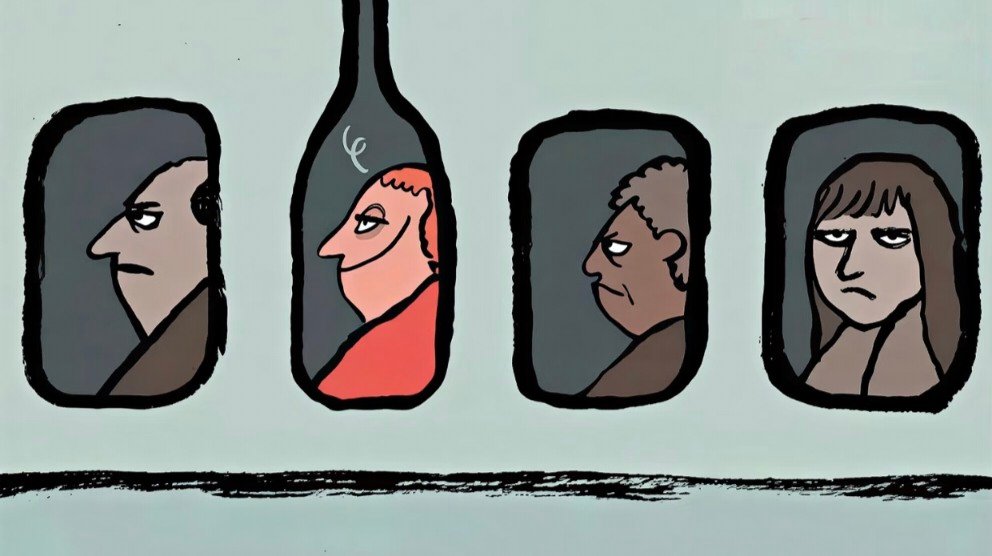
Several years ago, I was sitting on a flight to San Francisco, when my seatmate, a man a little older than me, struck up a conversation. Perhaps you hate it when that happens; I love it. In addition to being an extrovert, I’m a social scientist, so I’m always fascinated by what I can learn about people through conversations. Have you ever wanted to know how I come up with column topics? Now you know.
几年前,我坐在飞往旧金山的航班上,邻座是一位比我稍年长些的男士,他主动跟我攀谈起来。也许你讨厌这种情况;但我喜欢。除了性格外向,我还是个社会科学家,所以总是对通过交谈能了解他人感到很着迷。你是否曾好奇我是如何想出专栏话题的?现在你知道了。
The man told me he was on his way home from seeing his family in Minnesota, where he had grown up. As an adult, he had pulled up stakes, left the bone-chilling winters behind, and moved to Northern California, where he had no connections at all. He raved about the professional opportunities and great weather where he now lived, comparing them favorably to the landlocked, snowy place in which he was raised.
这位男士告诉我,他刚从明尼苏达州探望家人回来,那是他长大的地方。成年后,他离开那里,摆脱了刺骨的寒冬,搬到了北加州,那里他一个熟人都没有。他热情洋溢地夸赞起现在居住地的职业机会和宜人气候,将其与自己长大的那个内陆多雪之地做了对比,言辞中满是赞许。
Something in his words sounded tinny and hollow to me. I pondered this for a moment, and then asked him, “Do you ever miss Minnesota?” He didn’t answer for a minute or two, and looked away, and I noticed that his eyes had become shiny. Softly, he said, “Minnesota will always be my home.”
他的话里似乎有些空洞,我琢磨了一会儿,然后问他:“你有没有想念过明尼苏达州?”他沉默了一两分钟,目光移开,我注意到他的眼睛变得湿润了。他轻声说道:“明尼苏达州永远是我的家。”
Perhaps you can relate to my seatmate: feeling out of place, and as though where you live is not truly your home. That might be especially true today, when so many people have been involuntarily displaced by the pandemic or are stuck in living situations not of their own choosing.
或许你能理解我的邻座:感觉格格不入,觉得自己的居所并非真正的家。在如今这个因疫情而许多人被迫离开家园或被困在非自己所愿的生活环境中的时代,这种感觉可能尤为强烈。
But this upheaval could also provide an opportunity. As the economy changes, and quarantine has revealed that many jobs can be performed remotely, you might find yourself with more geographic flexibility than you have had in a long time. If you’re uncomfortable with the status quo, this time when life has been paused might be just the impetus you need to make you consider a change of place. This year could be the chance for you to move to the place where your heart resides.
但这种动荡也可能带来机遇。随着经济形势的变化,以及隔离措施让人们发现许多工作都可以远程完成,你可能会发现自己拥有了很长一段时间以来都没有的地理灵活性。如果你对现状感到不满,那么这段生活暂停的时期或许正是促使你考虑换个地方的动力。今年或许就是你搬到心之所向之地的机会。
There is a word for love of a place: topophilia, popularized by the geographer Yi-Fu Tuan in 1974 as all of “the human being’s affective ties with the material environment.” In other words, it is the warm feelings you get from a place. It is a vivid, emotional, and personal experience, and it leads to unexplainable affections. One of my fellow Seattle natives made this point to me when he said he hated the rain in Boston but not Seattle. Why? “Only Seattle rain is nice.”
有一个词可以形容对某个地方的喜爱:恋地情结,这个词由地理学家段义孚于1974年提出,指的是“人类与物质环境之间的情感联系”。换句话说,就是你从某个地方获得的温暖感受。这是一种生动、情感化且个人化的体验,会引发难以言喻的喜爱之情。我的一位西雅图老乡曾跟我讲过,他讨厌波士顿的雨,却喜欢西雅图的雨。为什么呢?“只有西雅图的雨是宜人的。”
In his book A Reenchanted World, the sociologist James William Gibson defines topophilia as a spiritual connection, especially with nature. Oladele Ogunseitan, a microbiologist at the University of California at Irvine, demonstrates topophilia by showing that people are attracted to both objective and subjective-even unconscious-criteria. My friend’s affinity for the “Seattle rain” is probably fueled by what Ogunseitan calls “synesthetic tendency,” or the way particular, ordinary sensory perceptions affect our memory and emotions. If the smell of a fresh-cooked pie, the sound of a train whistle at night, or the feeling of a crisp autumn wind evokes a visceral memory of a particular place, you are experiencing a synesthetic tendency.
社会学家詹姆斯·威廉·吉布森在其著作《重新着迷的世界》中将“地方依恋”定义为一种精神上的联系,尤其是与自然的联系。加州大学欧文分校的微生物学家奥拉德莱·奥贡塞坦通过证明人们会被客观和主观——甚至是无意识的一一标准所吸引,来阐释“地方依恋”。我朋友对”西雅图的雨”的喜爱,很可能源于奥贡塞坦所说的“联觉倾向”,即特定的、普通的感官知觉如何影响我们的记忆和情感。如果刚出炉的馅饼的香味、夜晚火车的汽笛声或者秋风的凛冽能唤起你对某个特定地方的强烈记忆,那么你正在体验一种联觉倾向。
It is worth reflecting on your strongest positive synesthetic tendencies—and the place they remind you of. They are a good guide to your topophilic ideal, and thus an important factor to be aware of as you design a physical future in line with your happiness. It is notable that one of the world’s most famous happiness experts, Tal Ben-Shahar, left a teaching position at Harvard University several years ago, where he had created the university’s then-most-popular class, to return to his native Israel—because he felt the pull of his homeland.
思考一下你最强烈的积极联觉倾向以及它们让你想起的地方是很有意义的。它们是你的“地方依恋”理想的良好指引,因此在你设计符合自身幸福的物质未来时,这是一个需要留意的重要因素。值得注意的是,世界著名的幸福专家塔尔·本-沙哈尔几年前离开了他在哈佛大学的教学职位,当时他开设的课程是该校最受欢迎的课程之一,他回到了自己的祖国以色列一一因为他感受到了祖国的召唤。
Topophilia might not be associated with your childhood home, however. For me, all synesthetic tendencies take me not to Seattle but to Barcelona, the city where I lived in my 20s, where I got married, and the only place I have returned to year after year (except for 2020, due to the pandemic). In my life here in the United States, smells and sights will sometimes remind me of my neighborhood in Barcelona and the first home my wife and I shared there. The sound of the Catalan language (the native tongue of Barcelona, which I learned as a younger man) is like music to me.
然而,恋地情结可能与你的童年故居无关。对我而言,所有的联觉倾向都把我带往的不是西雅图,而是巴塞罗那,那是我在20多岁时生活过的地方,也是我结婚的地方,也是我年年都会回去的地方(除了2020年,因为疫情)。在美国生活的日子里,有时气味和景象会让我想起我在巴塞罗那的街区以及我和妻子在那里共有的第一处住所。加泰罗尼亚语(巴塞罗那的本土语言,我在年轻时学过)的声音对我来说就像音乐一样。
But, of course, it’s not as simple as identifying your ideal home and uprooting your whole life to go there. Moving is costly and scary.
当然,这并不是说找到你理想中的家园,然后就彻底改变你的生活搬过去那么简单。搬家既费钱又令人害怕。
You probably have your own Barcelona or Minnesota, somewhere that has a highly topophilic place in your heart. Perhaps you sometimes daydream about going back-but then you snap out of it. Moving is a huge commitment, and not one to be made on a synesthetic whim. The cost of a big move is prohibitive for many people who might like to find a new home. Even if work and family circumstances make it possible, the idea of starting a new job, making new friends, changing schools, facing the DMV—it’s too much for many.
你可能也有自己的巴塞罗那或明尼苏达,那是你心中充满恋地情结的地方。也许你有时会幻想回去—但随后又会清醒过来。搬家是一项重大的承诺,绝不是心血来潮就能决定的。对于许多想换个新家的人来说,搬家的费用高得令人望而却步。即便工作和家庭情况允许,想到要开始一份新工作、结交新朋友、换学校、还要面对车管所一一对很多人来说,这实在是难以承受之重。
I have moved between states or countries 11 times in my adult life—once as recently as 2019—and it is always hard. Far more taxing than the logistics is the social adjustment. It came as no surprise to me to read one Dutch and German study showing that recent movers report having more unhappy days in a two-week testing period than people who hadn’t moved.
在我成年后的生活中,我已辗转过11个州或国家一一最近一次是在2019年一一每次搬家都很难。搬家过程中最让人疲惫不堪的并非实际操作,而是社交方面的调整。读到一项荷兰和德国的研究时,我并不感到意外,该研究显示,在为期两周的测试期内,刚搬家的人比未搬家的人有更多不开心的日子。
Perhaps for these reasons, in recent years people have been moving less and less, according to U.S. Census data. In 1964, the year I was born, more than 20 percent of the population changed homes. In 2000, it was a little over 16 percent. In 2019, it was under 10 percent.
或许正是由于这些原因,根据美国人口普查数据,近年来人们的搬家频率越来越低。我出生的1964年,超过20%的人口更换了住所。2000年,这一比例略高于16%。2019年,这一比例已降至10%以下。
But the social costs of moving are manageable. People often commit errors when they move that make them feel more lonely and isolated than is necessary. For example, the Dutch researchers found that when people move, they tend to spend less time than people who already live in that place on “active leisure” like exercise and hobbies, and more time on the computer. It’s hard to imagine something more self-destructive than looking at social media when you are lonely.
不过,搬家带来的社交成本是可控的。人们在搬家时常常犯错,让自己比实际需要的更孤独、更孤立。例如,荷兰的研究人员发现,搬家的人往往比已经在那个地方生活的人花更少的时间在锻炼和爱好等“积极休闲”活动上,而花更多的时间在电脑前。很难想象还有什么比在孤独时刷社交媒体更自毁前程的事了。
In her book This Is Where You Belong, the author Melody Warnick looks at the evidence on moving and happiness and argues that a large part of the unhappiness people suffer at the outset of arriving in a new place can be mitigated or avoided with a number of practices, including actively exploring your new neighborhood instead of hunkering up in a new home, doing the things that made you happy in your old home, and socializing with new people. If you are asking how can I socialize when no one invites you anywhere, the answer is to start having people you meet over to your place. I can vouch for this idea: When we move, we make it a point to have at least two dinners at our house per month in the first year. It helps a lot.
在她的著作《此地即吾乡》中,作者梅洛迪·沃尼克审视了有关搬迁与幸福感的证据,并指出人们初到新地方时所遭受的大部分不快,可以通过一些做法来减轻或避免,比如积极地探索新社区,而不是把自己关在新家里;继续做在旧居时让自己开心的事;与新结识的人交往。如果有人问,当没人邀请你去任何地方时,该如何与人交往,答案是把遇到的人请到自己家里来。我可以认为这个想法作证:我们搬家后,第一年里每个月至少在家里请客两次。这很有帮助。
Furthermore, “moving” is relative. For some, the topophilic ideal—or the only financially manageable option, under current circumstances—might be to a neighborhood just across town. Smaller moves mitigate social costs as well as economic costs, and could still provide happiness benefits. Perhaps the other neighborhood has more space, or is closer to loved ones—or maybe it just has nicer rain.
此外,“搬迁”是相对而言的。对一些人来说,在当前情况下,恋地情结的理想选择一或者唯一经济上可行的选择一—可能是搬到城里的另一个街区。较小规模的搬迁也能降低社交成本和经济成本,而且仍能带来幸福感。也许另一个街区空间更大,或者离亲人更近一—或者也许那里只是雨下得更美。
Perhaps the biggest obstacle for you is that it seems so bold to make a change just for a feeling. It’s hard to defend acting on a desire to change purely because you want to. Some people will think you’re crazy, which brings me to my last point.
也许对你来说最大的障碍在于,仅仅为了某种感觉就做出改变,这种做法实在太过大胆。仅仅因为自己想改变就去行动,这种做法很难从逻辑上进行辩护。有些人会觉得你疯了,这让我想到了我的最后一点。
A few years ago, I wrote a textbook on social entrepreneurship. Among the entrepreneurs I studied, I noticed a tendency to put personal capital at risk for the sake of enormous returns—returns that might be unforeseeable when the risk was taken, but that entrepreneurs intuitively felt would come. As the economist Joseph Schumpeter described the entrepreneurial impulse: “There is the dream and the will to found a private kingdom.”
几年前,我写了一本关于社会创业的教科书。在研究过的创业者中,我注意到他们有一种倾向,那就是为了获得巨大的回报而将个人资本置于风险之中一一这些回报在冒险时可能难以预见,但创业者凭直觉认为它们终会到来。正如经济学家约瑟夫·熊彼特所描述的创业者冲动:“有一种梦想和建立一个私人王国的意志。”
Not everyone is a business starter, of course. But you can still be an entrepreneur in the truest sense, occupied in the enterprise of building your life, your private kingdom. And sometimes, that means risking your emotional capital for explosive rewards that you feel in your heart will come.
当然,并非每个人都是创业者。但你仍然可以在最真实的意义上成为一个创业者,投身于构建自己的生活、自己的私人王国的事业中。有时,这意味着要冒着情感资本的风险,去追求那些你内心深处认为会到来的巨大回报。


