
三十而立正变得越来越难Life for 30-Somethings Is GettingMore Stressful
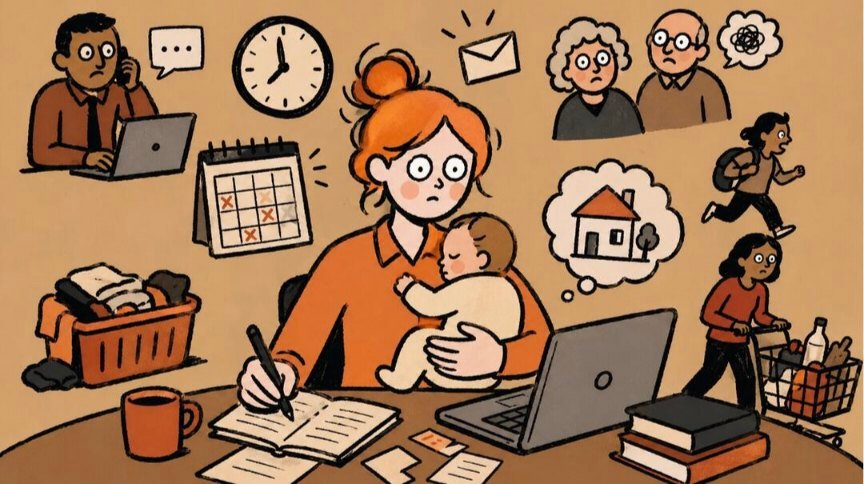
Clare M. Mehta, an Emmanuel College psychology professor, was livid. She was on a committee for hearing graduate students defend their dissertations, and she had planned meticulously to accommodate their next online meeting. She had a two-month-old daughter, no child care.
伊曼纽尔学院的心理学教授克莱尔·M·梅塔感到颇为恼火。她是一个研究生答辩委员会的成员,为了配合接下来的线上会议,她做了精心的安排。她有一个两个月大的女儿,没有保姆。
Then, the day of, another professor dashed off a casual note: Could they start the meeting 15 minutes early? When Mehta appeared on camera bouncing her newborn in her lap, that professor started laughing sympathetically. She’d just read Mehta’s 2020 paper on the life phase from age 30 to 45, which described it as a hurricane of major changes and responsibilities. Career advances, marriage, parenthood, homeownership, care for aging parents…
然而,就在开会当天,另一位教授随手发来一条简短的消息:能不能提前15分钟开会?当梅塔出现在镜头前,把刚出生的婴儿抱在腿上颠弄时,那位教授同情地笑了起来。她刚刚读过梅塔在2020年发表的一篇关于30到45岁人生阶段的论文,文中将这一时期描述为一场交织着重大变化与责任的风暴。职业晋升、婚姻、为人父母、买房置业、照顾年迈的父母……
For many people these days, the paper had argued, all of those milestones fall in a short and furious chunk of time. And here Mehta was, embodying that point. The connection between Mehta’s circumstances and her academic focus wasn’t a coincidence.
论文指出,对如今的许多人来说,所有这些人生里程碑都集中在一段短暂而激烈的时期内。而眼下的梅塔,正是这一观点的生动写照。梅塔的处境与她的学术焦点之间的联系并非巧合。
Mehta was in her 30s when she started noticing that no one seemed to be studying her own age group. Her colleague Jeffrey Jensen Arnett, the author of Emerging Adulthood: The Winding Road From the Late Teens Through the Twenties, had become an expert in ages 18 to 29. Psychologists of middle age, meanwhile, were usually observing those in their 50s and early 60s. She’d reached a part of life that was anything but quiet, yet when she looked to her field for answers, she heard relative silence.
在30多岁时,梅塔开始注意到,似乎没有人研究她所在的这个年龄段。她的同事、《初显期成年:从十多岁后期到二十多岁的曲折之路》一书的作者杰弗里·詹森·阿内特,已经成为研究18到29岁人群的专家。与此同时,研究中年的心理学家通常观察的是50多岁和60岁出头的人。她步入了一个并不平静的人生阶段,然而,当她向自己的学术领域寻求答案时,得到的却几乎是相对的沉默。
Now, at 45, she has interviewed many, many people in this stage, which she named “established adulthood.”
如今,45岁的她已经采访了许多处于这一阶段的人,并将其命名为“稳固成年期”。
She believes that life for the youngish—especially for women—is getting only more hectic.
她认为,对于较为年轻的人群——尤其是女性——生活只会变得越来越忙碌。
And compared with eras past, people today tend to be older when they begin hitting the classic landmarks of adulthood. A typical young person might once have, say, met a partner in their teens, married and started a family at 20-something, then taken on more career responsibility or begun caring for an ailing parent while in their 30s. Now all of these formative experiences are getting compressed.
与过去相比,如今的人们在迎来经典的成年里程碑时,往往年龄更大。曾经,一个典型的年轻人可能在十几岁时遇到伴侣,二十多岁时结婚生子,然后在三十多岁时承担更多的职业责任,或是开始照顾生病的父母。而现在,所有这些塑造人生的经历都被大幅压缩了。
Many people do cherish this time, Mehta told me. But the fact remains that they’re in the “rush hour of life”—and they may be dealing with a milestone pileup. To understand what’s changing about established adulthood, you first have to consider the 18-to-29 phase that Arnett calls “emerging” adulthood: “the most tumultuous decade of life,” he told me, when people change residences, jobs, and partners the most often.
梅塔告诉我,许多人确实很珍惜这段时光。但事实依然是,他们正处于人生的“早晚高峰”——可能还要应对人生里程碑的“连环追尾”。要理解“稳固成年期”正在发生的变化,你首先需要审视阿内特所说的18到29岁这段“初显期”成年阶段:他告诉我,这是“人生中变动较多的十年”,人们在这个阶段最频繁地更换住所、工作和伴侣。
The average 20-something has habits and rhythms that are “very much in flux,” he said, “because they’re still in the process of deciding what kind of adult life they want”—and what kind they can realistically have. Recently, this period of uncertainty has been getting longer: Many young people are saddled with debt, searching for work in a brutal job market…
他说,二十多岁的人的习惯和生活节奏“非常不稳定”,这是“因为他们仍在决定自己想要什么样的成年生活”——以及在现实中他们能够拥有什么样的生活。近年来,这段充满不确定性的时期正在变长:许多年轻人背负债务,在激烈的就业市场中苦苦求职……
Building a career, a home, or lasting relationships—all things that can help shape a person’s sense of self—have become more difficult. And as emerging adulthood expands, it eats into the next stage of life. That phase, established adulthood, is typically when heady young-adulthood questions begin to be answered.
建立事业、组建家庭或是维系长久的关系——这些能够帮助塑造个人自我认同的事情——变得越来越困难。随着初显期成年阶段的延长,它不断蚕食着下一个人生阶段。而那个阶段,也就是稳固成年期,通常是年轻人那些令人头脑发热的问题开始得到解答的时候。
Perhaps after a bunch of short stints in different jobs, someone figures out what field of work really excites them. Or each breakup over the course of years grants them a little more clarity on what they’re looking for in a relationship, and eventually that leads to a great match. You might lose a sense of wide-open possibility, but the prize is an increase in “ontological security”: the sense that your life is predictable…
也许在换了几份短暂的工作之后,有人终于弄清楚了真正让自己兴奋的领域是什么。或者,多年来每一次的分手都让他们更加明确自己在关系中到底在寻找什么,并最终促成了一段美好的姻缘。你可能会失去那种拥抱无限可能性的感觉,但作为回报,你获得了“本体安全感”的提升:一种生活可预测的踏实感。
Knowing better what to expect, you’re able to meaningfully use your time, Jeffrey A. Hall, a communication-studies professor at the University of Kansas, told me. Yet now, when established adulthood does arrive, the truncated timeline can make it more chaotic. Some of those traditional milestones can be pushed back only so far.
堪萨斯大学传播学教授杰弗里·A·霍尔告诉我,当你更清楚未来的走向时,你就能够更有意义地利用自己的时间。然而现在,当稳固成年期真正到来时,被压缩的时间线会让它变得更加混乱。一些传统里程碑只能被推迟。
Mehta had delayed having a child for years, wanting to focus on all the other demands of her bustling life. But once she became a mom, at 43, everything seemed to be happening at once. When I spoke with her, she mentioned as politely as possible that even finding time for our conversation hadn’t been easy: She was in between child-care solutions and trying to cram all of her job-related work into three days…
为了兼顾忙碌生活中的各种需求,梅塔将生育计划推迟了数年。但在她43岁成为母亲的那一刻,一切似乎都同时降临了。在我和她交谈时,她尽可能礼貌地提到,即使是挤出时间来接受采访也绝非易事:她正忙于寻找育儿方案,同时还要努力将所有的工作塞进三天内完成……
“I’m trying to keep my career going up,” she said. “I feel like I’m too young to be plateauing. And I’m definitely too young to be slowing down.” Across the globe, average happiness has for many years looked U-shaped: People have tended to be least happy around their 40s.
“我在努力让自己的事业保持上升,”她说,“我觉得自己还太年轻,不该陷入停滞。而且我确实还没有到可以放慢脚步的年纪。”纵观全球,多年来平均幸福感一直呈现出U型曲线:人们在40岁左右往往最不快乐。
“But that doesn’t necessarily reveal some hardwired, inevitable midlife crisis that each of us must pass through. Many researchers believe, rather, that it indicates a time period when people need more help than they’re getting. Mehta mentioned a 2016 study that analyzed many different industrialized nations and documented a happiness gap between parents and nonparents—but found that it was substantially smaller in countries with more generous policies.”
但这并不一定揭示了某种根深蒂固、不可避免且每个人都必须经历的中年危机。相反,许多研究人员认为,这表明在这个时期,人们需要的帮助远远多于他们实际得到的。梅塔提到了一项2016年的研究,该研究分析了许多不同的工业化国家,并记录了父母与非父母之间的幸福感差距——但发现,在那些政策更为慷慨的国家,这种差距要小得多……
(The United States had the largest difference between parent and nonparent happiness.) One can imagine that with more government support—federally mandated parental leave; paid family leave for people taking care of sick parents or other loved ones—established adulthood would be a lot less stressful.
(美国在父母与非父母幸福感差异上是最大的。)可以想象,如果在稳固成年期能获得更多政策层面的支持——比如联邦政府强制规定的育产假,或是为照顾生病父母及其他亲人提供的带薪家庭假——人们的压力会小很多。
The irony, though, is that what makes life overwhelming is often what makes it meaningful. In 2021, a market-research firm asked 2,000 people how old they’d be if they could be one age for the rest of their life. The most common answer was 36. And recently, researchers have discovered that the U-shaped happiness curve may be changing. One 2024 study, using data from a national health agency, found that since roughly 2014, happiness has been declining.
然而,令人感慨的是,那些让生活令人应接不暇的事物,往往也是赋予生活意义的源泉。2021年,一家市场调研公司询问了2000人,如果余生只能停留在某个年纪,他们会选择几岁。最常见的答案是36岁。最近,研究人员发现这种U型幸福曲线可能正在发生改变。一项利用国家卫生机构数据进行的2024年研究发现,大约自2014年以来,幸福感一直呈下降趋势。
…for the average 18-to-25-year-old—particularly for women. Emerging adulthood has become so much unhappier, on average, that now established adulthood is a time of relative contentment: one of less self-reported stress and depression. That may go to show how glorious a bit of ontological security can be.
特别是对于18到25岁的普通年轻群体,尤其是女性。初显期成年阶段的平均幸福感变得如此之低,以至于现在稳固成年期反而成了一段相对满足的时光:在这个阶段,自我报告的压力和抑郁感都有所减少。这或许恰恰证明了一点点本体安全感是多么美好。
Arnett has been interviewing emerging adults for many years, and he likes to ask: How do you see your life 10 years from now? “Almost nobody says, Well, I hope I’m still changing jobs twice a year and looking for my soulmate,” he said. “They all envisioned, in their 20s, a more stable, settled life in their 30s.” “Settled” doesn’t always mean a house, a spouse, and kids. It means a sense of continuity in one’s routine and identity.
阿内特多年来一直在采访初显期的成年人,他喜欢问:你如何看待自己10年后的生活?他说:“几乎没有人会说,嗯,我希望我还一年换两次工作、苦苦寻找灵魂伴侣。他们在20多岁时,都对30多岁能拥有一个更加稳定、安顿的生活充满了憧憬。”“安顿”并不总是意味着拥有房子、配偶和孩子。它意味着在个人的日常生活和身份认同中有一种连续性。
A 51-year-old methodologist in Texas told me that in established adulthood, he began volunteering—dropping off Thanksgiving meals, spending time with seniors—which left him swamped but gave him a sense of purpose. “You want to be somebody,” he said. “You want to be respected. You want to feel like you’re accomplishing something.”
得克萨斯州一位51岁的方法学专家告诉我,在稳固成年期,他开始做志愿工作——配送感恩节餐食、陪伴老年人——这些事让他忙得不可开交,但也赋予了他一种使命感。“你想成为有价值的人,”他说,“你希望受到尊重。你想感觉到自己正在成就一番事业。”
Lori Fisher, a 46-year-old in Colorado, told me that after trying a career path she hated, breaking up with her college boyfriend, traveling, waiting tables, and applying to graduate school, “closing off avenues” started to feel like a relief. She met her husband, and they moved to a small town to open a school together. The days were packed, she said, but “we became more comfortable steering the ship of our lives.”
科罗拉多州46岁的洛丽·费希尔告诉我,在尝试了自己讨厌的职业道路、与大学男友分手、四处旅行、做服务员以及申请研究生之后,“关闭那些多余的选项”开始让她感到一种解脱。她遇到了现在的丈夫,两人搬到了一个小镇,共同创办了一所学校。她说,虽然每天的日程都排得很满,但“我们在掌控自己人生航船时变得更加从容了。”
Of course, 30-and 40-somethings aren’t all perfectly confident in the choices they’ve made. But Mehta has found that a lot of them give up on the idea of making perfect choices at all. She talked about Kierkegaard, a kind of patron philosopher of established adulthood, who said that you’ll essentially be unhappy no matter what you do. “If you marry, you’ll be unhappy. If you don’t marry, you’ll be unhappy,” Mehta said. “Have children—you will be miserable. Don’t have children—you’ll be miserable.” In her research interviews, a lot of people have said that life didn’t pan out the way they once imagined it would—and that they’re okay with it. One of her study participants had wanted to be a doctor, and she’d ended up in medical billing.
当然,30多岁和40多岁的人并不总是对自己的选择充满自信。但梅塔发现,他们中的许多人已经完全放弃了做出完美选择的念头。她提到了克尔凯郭尔——这位堪称稳固成年期“守护哲学家”的人物曾说过,无论你做什么,本质上你都会是不幸的。“如果你结婚,你会不快乐。如果你不结婚,你也会不快乐,”梅塔说,“生孩子,你会痛苦;不生孩子,你依然会痛苦。”在她的研究采访中,许多人表示,生活并没有像他们曾经想象的那样发展,但他们对此已经释然。她的一位研究对象曾经梦想成为一名医生,最终却从事了医疗计费工作。
“You have enough of a network to pick up the phone and call people and get things moved.” At the same time, to say that peace and rest are surely coming, just a couple of milestones away, might be overly optimistic.
“你积累了足够的人脉,只需拿起电话找人,就能把事情推进下去。”然而与此同时,如果说只要跨过几个里程碑,平静与安宁就一定会到来,这也许过于乐观了。
Fewer people can count on the classic rites of passage anymore—or assume that those rites will make the rest of life easier. The life course simply is no longer that predictable, Hall said. Somebody who lands a dream career in their 30s might still be toileing away in older adulthood, unable to afford retirement. Or a parent might expect some empty-nest freedom once their child grows up, only to find that the kid still needs to live at home or can’t get by without financial support.
如今,越来越少的人能依靠那些经典的成长仪式,或者理所当然地认为这些仪式会让余生变得更轻松。霍尔指出,人生的轨迹根本不再具有那么强的可预测性。一个在30多岁获得理想事业的人,可能到了晚年依然在辛苦劳作,无力负担退休生活。或者,有的父母可能满心期待孩子长大后能享受“空巢”的自由……却发现孩子依然需要住在家里,或者在没有经济支持的情况下难以维持生计。
In some sense, all the life phases are becoming more like emerging adulthood: rocky and uncertain.
在某种意义上,人生的所有阶段都变得越来越像初显期成年阶段:充满坎坷与不确定性。
The established adults who do reach solid ground, I think, are the lucky ones—and they may find that, after all, it’s still an era of freedom and possibility. “Life is actually pretty damn long,” Fisher said she realized. She feels now that time is both precious and expansive; that she will find yet more forks in the road. “I don’t just make decisions once,” she said. “We make them over and over again.”
我认为,那些真正踏上坚实土地的稳固成年人是幸运的——他们或许会发现,归根结底,这依然是一个充满自由与可能的时代。“人生其实真的很长,”费希尔说她意识到了这一点。她现在觉得时间既珍贵又广阔;她相信自己会遇到更多的人生岔路口。“我做决定并非只有一次,”她说。“我们会一次又一次地做出选择。”


