
在睡眠中学习居然是可能的It’s Possible to Learn in Our Sleep
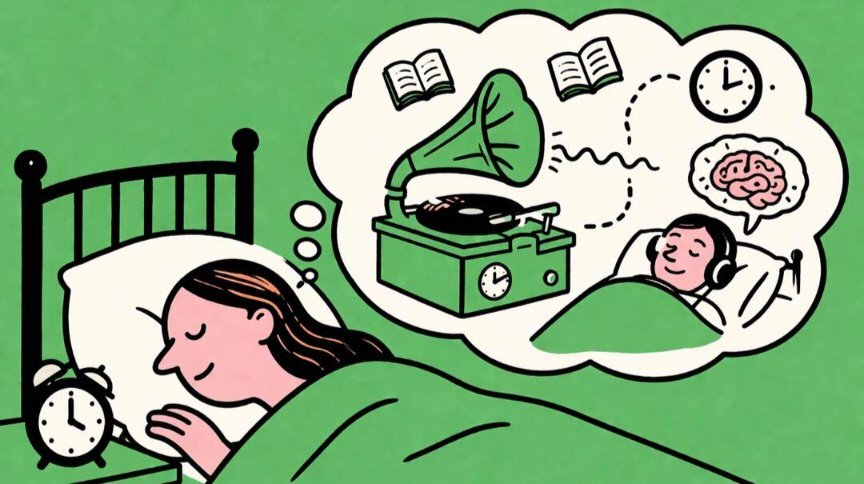
In 1932, the inventor Alois Benjamin Saliger patented the Psycho-phone, a phonograph hooked up to a timer which could play recordings while a person was asleep. An advertisement in Psychology magazine declared that, by listening to Saliger’s messages overnight, a person could get results that ‘would take months or years to accomplish by conscious effort.’ The device cost up to two hundred and thirty-five dollars—more than four thousand dollars in today’s money. In 1933, a writer for this magazine visited Saliger and reviewed letters from satisfied customers. Some said that they’d lost weight or come into money. One claimed to be expecting a ‘Psycho-phone baby.’
1932年,发明家阿洛伊斯·本杰明·萨利格为“心理电话”申请了专利。这是一种连接了定时器的留声机,能在人睡觉时播放录音。《心理学》杂志的一则广告宣称,通过彻夜倾听萨利格的信息,人们可以获得“需要几个月甚至几年刻意努力才能达到的效果”。这台设备当时售价高达235美元——相当于今天的4000多美元。1933年,本刊一位作者拜访了萨利格,并查阅了满意客户的来信。有人说自己减肥成功了,有人说发了财。甚至有人声称自己正期待着一个“心理电话宝宝”。
People have long fantasized about learning effortlessly during sleep. What if you could snooze through ‘War and Peace’ and wake up having absorbed it? In Aldous Huxley’s dystopian novel ‘Brave New World,’ hypnotopaedia-sleep education-not only teaches new languages but brainwashes people with government messaging. Many thinkers have reported that key insights came to them in their dreams. For the Russian chemist Dmitri Mendeleev, in 1869, it was the organization of the elements into the periodic table. For the novelist Mary Shelley, it was the plot of ‘Frankenstein.’ Early studies seemed promising, yet they lacked the means to verify if subjects were truly asleep.
人类长期以来一直幻想能毫不费力地在睡眠中学习。如果能在一觉睡过《战争与和平》后就掌握其内容该多好?在赫胥黎的乌托邦小说《美丽新世界》中,“催眠教育”不仅能教授语言,还能通过官方信息对民众进行洗脑。许多思想家曾报告说,关键灵感源于梦境。1869年,俄国化学家门捷列夫在梦中感悟到了元素周期表;小说家玛丽·雪莱则在梦中构思出了《科学怪人》。早期的相关研究似乎前景广阔,但当时缺乏手段来验证受试者是否真的处于深度睡眠状态。
In a 1954 paper, researchers Simon and Emmons concluded that in most sleep-learning studies, subjects were actually awake—rendering findings meaningless. This effectively condemned sleep learning to the realm of science fiction and quackery. Ken Paller, a neuroscientist at Northwestern University, noted that it was long thought to be a crock. In recent years, scientists have been trying again. Karen Konkoly, a dream researcher, gave puzzles to lucid dreamers -people who become aware they are dreaming. One puzzle involved planting four trees equidistant from each other. Dashiell Bark-Huss, a software programmer, spent the night in the lab with electrodes on her head to solve it.
1954年,研究人员西蒙和埃蒙斯得出结论:大多数睡眠学习研究中的受试者其实是清醒的,这使得相关发现毫无意义。这实际上将睡眠学习放逐到了科幻和江湖骗术的领域。西北大学神经科学家肯·帕勒指出,很长一段时间内,这都被认为是无稽之谈。然而近年来,科学家们开始了新的尝试。梦境研究员凯伦·康科利向“清醒梦”者(即在梦中意识到自己在做梦的人)布置了谜题。其中一个谜题是:如何栽种四棵彼此间距完全相等的树。程序员达希尔·巴克-赫斯戴着电极片在实验室过夜,试图在梦中破解它。
The current wave of sleep-learning research began in 2007. A Swiss team asked people to memorize locations on a graph while smelling rose scent. Later, when participants were sleeping, they were exposed to the scent again. The next day, unconscious exposure seemed to help them remember the locations better. This approach is now known as targeted memory reactivation. What we learn in our sleep can apparently influence our behavior, too. In 2014, smokers who smelled a mix of cigarettes and rotted fish overnight subsequently reduced their consumption by more than thirty percent—more than people who smelled the pairing while awake.
目前的睡眠学习研究浪潮始于2007年。瑞士的一个团队要求参与者在闻着玫瑰花香时记住图表位置。随后,当参与者入睡,研究者再次让他们闻这种气味。第二天,这种潜意识下的接触似乎帮助他们更好地记住了位置。这种方法现在被称为“定向记忆再激活”。我们在睡眠中所学到的东西显然也能影响行为。2014年的一项研究显示,烟民在睡眠中闻到香烟与死鱼混合的气味后,吸烟量减少了30%以上,效果比清醒状态下闻到同样气味的人更为显著。
In a striking example, lab groups witnessed conversations with people in the midst of dreams. Lucid dreamers answered math problems like ‘eight minus six.’ Electrodes verified they were not awake. Participants responded by moving their eyes from left to right, counting out the correct answer from beyond the dream world. Mazurek, a participant, recalled hearing the problem during a dream about his favorite video game. Thomas Andrillon, a sleep neuroscientist, called it ‘one of the most mind-breaking papers I’ve ever read.’ Participants figured out forty-two per cent of puzzles that showed up in their dreams, compared to only seventeen per cent otherwise.
在一个惊人的实验案例中,研究小组目睹了与梦中人的“对话”。清醒梦者甚至能回答“8减6”这样的数学题。电极证实他们并非清醒。参与者通过左右移动眼球来做出回应,在梦境之外“数”出了正确答案。参与者马祖雷克回忆说,他在一个关于电子游戏的梦里听到了问题。睡眠神经科学家托马斯·安德里隆称其为“读过的最震撼心灵的论文之一”。实验证明,如果谜题出现在梦中,参与者的破解率达42%,而没出现在梦中的谜题破解率仅为17%。
Is it time to design a new Psycho-phone? Certain kinds of thinking might be easier while we’re asleep. To solve the tree puzzle, one must think in three dimensions—forming a pyramid. Our unconscious mind might be better at these creative leaps and associating unrelated stimuli than our waking brain. But there could be downsides to interfering with sleep. We depend on sleep for restoring the body and discarding unnecessary memories. Targeted memory reactivation can sometimes disrupt sleep quality. Andrillon warned against trying to harness the sleeping mind for the waking world, noting that dreams follow their own inexplicable rules.
现在是时候设计一款新的“心理电话”了吗?某些思维模式在睡眠中可能确实更容易。要解决种树谜题,必须具备三维思维——形成一个椎体。我们的潜意识在处理这种创造性飞跃和关联无关刺激方面,可能比清醒的大脑更擅长。但干预睡眠也存在弊端。我们依靠睡眠恢复身体并清除无用记忆。定向记忆再激活有时会破坏睡眠质量。安德里隆警告说,不要为了清醒世界而强行利用睡眠中的大脑,因为梦境遵循着它们自身难以解释的规律。
Karen Konkoly agrees with these concerns. She recently discussed the dangers of ‘colonizing’ sleep with ‘wake-centric values.’ In a recent lucid dream, she opened a door in a tree trunk and saw herself as an old woman. She asked her older self for advice on what to do differently. Her older self replied, ‘I wish that I listened more.’ When Konkoly asked about her future accomplishments, the woman mentioned an administrative job at a university. Konkoly was underwhelmed. ‘I want to do something cooler than that!’ she thought, preferring to learn from sleep rather than just learning during it.
凯伦·康科利也认同这些担忧。她最近探讨了用“清醒中心价值观”来“殖民”睡眠的危险。在最近的一个清醒梦中,她推开树干上的一扇门,看到了年老的自己。她向未来的自己请教人生建议。年老的她回答说:“我希望我以前能多听听他人的意见。”当康科利问及未来的成就时,那位老妇人提到了一份大学的行政工作。康科利对此大失所望。“我想做点更酷的事情!”她想。相比于在睡眠中学习,她或许更倾向于向睡眠本身学习。
In a recent lucid dream, Konkoly found herself standing in front of an old tree that had a door in its trunk. When she opened the door, she saw a coffin, and inside the coffin she saw herself as an old woman. Konkoly asked her older self, “What do you wish that you knew earlier in life, or did differently?” Her older self replied, “I wish that I listened more.” Then Konkoly asked what she would accomplish in life. The answer underwhelmed her. “She said something about an administrative job at a university,” Konkoly told me. “I thought, ‘I want to do something cooler than that!’”
在最近的一次清醒梦中,康科利(Konkoly)发现自己站在一棵古树前,树干上有一扇门。当她推开那扇门时,看到了一口棺材,而棺材里躺着的正是年老后的自己。康科利问那个年老的自己:“你希望自己早年就知道些什么,或者在哪件事上做出不同的选择?”年老的她回答道:“我希望我以前能多听听他人的意见。”随后,康科利问起自己这一生会取得什么成就,得到的答案却让她大失所望。“她说了一些关于在大学做行政工作的事,”康科利告诉我,“我当时心想:‘我想做点比这酷得多的事儿!’”


