
老年人通便的三个自然秘诀Gentle habits keep the gut moving freely
Someone found this: A 2023 clinical trial published in the Journal of Gastroenterology had participants increase soluble fiber by 5g per week. At week 6, bowel movement frequency increased by 40% without any medication.
一项发现:2023年发表在《胃肠病学杂志》上的一项临床试验显示,参与者每周增加5克可溶性纤维。在第六周时,排便频率增加了40%,且无需任何药物。
You’ve heard “drink more water.” That vague advice fails because timing matters more than volume. Most older adults unknowingly dehydrate themselves. The body’s thirst mechanism weakens with age — so by the time you feel thirsty, you’re already dehydrated by 2-3 cups.
你肯定听过“多喝水”这种建议。但这种模糊的建议往往无效,因为时机比饮用量更重要。大多数老年人会在不知不觉中脱水。身体的口渴机制会随着年龄增长而减弱——所以当你感到口渴时,其实已经脱水2-3杯了。
The shift: 8+ glasses is the baseline. But the real strategy is water distribution — sipping throughout the day rather than gulping. Why? Because fiber needs consistent hydration to form that gel structure. Drink all your water at once, and your kidneys flush it out before your colon can use it.
改变方式:每天8杯水是基础。但真正的策略是水分的分配——全天小口啜饮,而不是大口猛灌。为什么?因为纤维需要持续的水分来形成凝胶结构。如果一次性喝掉所有水,肾脏会在结肠利用之前将其排出。
Evidence: The 2024 Aging Clinical Research meta-analysis found that participants who spaced 8 glasses across the day (vs. concentrated drinking) saw 35% better stool consistency scores.
证据:2024年《衰老临床研究》的荟萃分析发现,那些将8杯水分散到全天饮用(而非集中饮用)的参与者,其粪便稠度评分提高了35%。
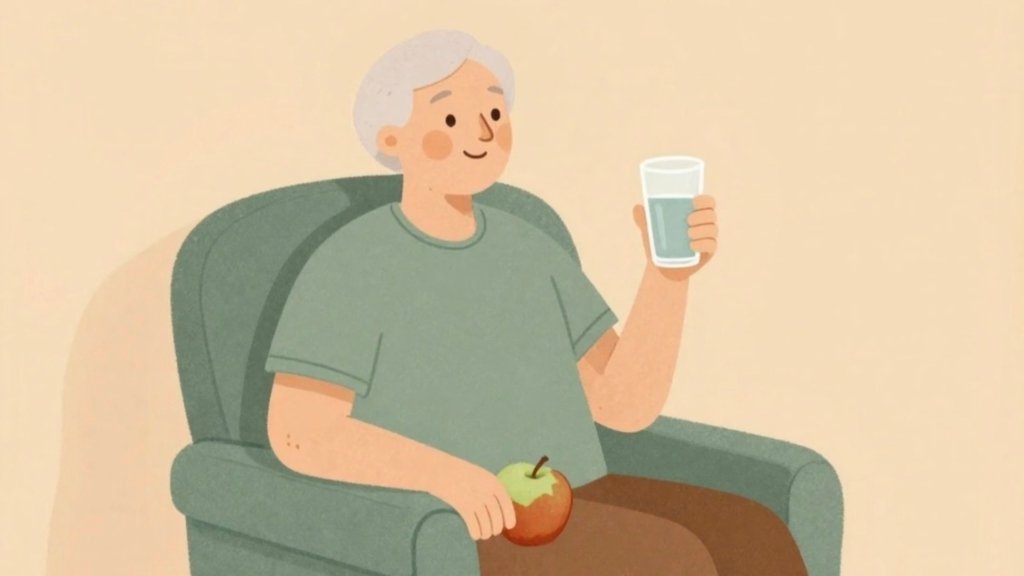
Micro-action you can take in 60 seconds: Place a full glass of water beside your bed tonight. Drink it immediately upon waking — before coffee, before anything. This triggers the gastrocolic reflex before your gut starts its daily slowdown.
60秒内即可采取的微小行动:今晚在床边放一杯满满的水。醒来后立即饮用——在喝咖啡之前,在做任何事之前。这会在肠道开始日常减速前,触发胃结肠反射。
Every doctor says “exercise more.” But gentle movement — specifically rhythmic walking — does something that weights and cardio don’t: it physically massages your colon through gravitational oscillation.
每位医生都会说“多运动”。但轻柔的运动——特别是律动步行——所做的是举重和有氧运动无法做到的:它通过重力振荡,物理性地按摩你的结肠。
Every footstep creates a subtle bounce in the abdominal cavity. Over 20 minutes, those micro-movements stimulate peristalsis (the wave-like contractions that push waste through). There’s nothing mystical about it — it’s mechanical engineering inside your own body.
每一步都会在腹腔内产生轻微的弹跳。在20分钟内,这些微小运动能刺激肠道蠕动(推动废物通过的波浪状收缩)。这并非什么神秘之事——它只是你身体内部的机械工程。
What someone found: A 2022 observational study from the University of Michigan tracked adults 55+ who walked for 20 minutes after their largest meal. Compared to a control group, they experienced 50% fewer constipation episodes over 3 months. The key: Gentle after-meal walks produce different results than morning jogs. The vagus nerve activation paired with digestive timing creates a synergy that no solo exercise can replicate.
一项发现:密歇根大学2022年一项观察性研究追踪了55岁以上、在主餐后步行20分钟的成年人。与对照组相比,他们在3个月内便秘发作次数减少了50%。关键在于:饭后轻柔的散步与晨跑效果不同。迷走神经的激活结合消化时机,创造出单独运动无法复制的协同效应。
Your 30-Day Exit Plan. 24 hours: Increase water by one glass (spread across the day) and take one 10-minute walk after your largest meal. 7 days: Add 5g soluble fiber (half a cup of oats or one apple). Maintain hydration. Increase walks to 20 minutes.
你的30天改善计划。24小时:增加一杯水(全天分次饮用),并在主餐后进行一次10分钟的散步。7天:增加5克可溶性纤维(半杯燕麦或一个苹果)。保持水分摄入。将散步时间增加到20分钟。
30 days: Target 25-30g soluble fiber daily, 8+ glasses of water properly spaced, and a 20-minute post-meal walk as a non-negotiable routine. Here’s what most people don’t know: Your body isn’t broken. The signals between your brain and gut have just gotten quieter.
30天:目标是每天25-30克可溶性纤维,8杯以上水并合理分配饮用,以及将20分钟的饭后散步作为一项不可妥协的日常。大多数人不知道的是:你的身体并没有坏掉。只是大脑和肠道之间的信号变得更微弱了。
These three interventions don’t force your system — they turn the volume back up. The research is clear. The path is simple. The only variable left is whether you start tonight. One glass of water, one apple, one ten-minute walk. That’s all it takes to send the first signal.
这三项干预措施并非强迫你的系统——它们只是把音量调回来。研究结果清晰明了,方法也简单。剩下的唯一变量就是你是否今晚就开始行动。一杯水,一个苹果,一次十分钟的散步。发送第一个信号,仅此而已。


