
大脑为何抗拒积极改变Rewire your brain’s resistance to positive change
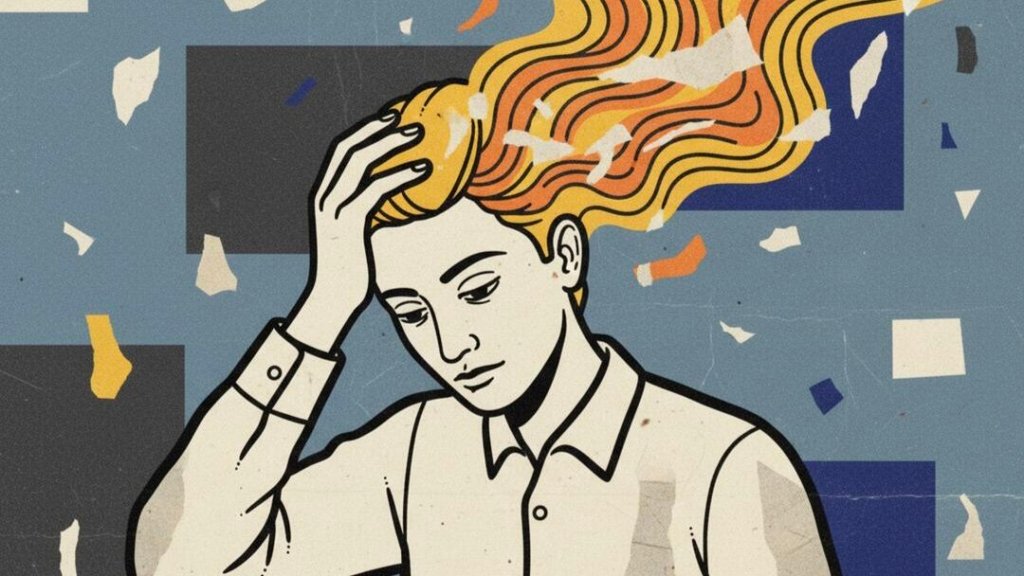
You know that feeling when you set an alarm for 5 AM, determined to start that morning routine you’ve been dreaming about for months? The alarm rings, your hand reaches out, and something inside you whispers, ‘Just five more minutes.’ That whisper isn’t laziness. It’s your basal ganglia—the ancient survival center of your brain—prioritizing predictability over growth. Your brain isn’t wired for your success; it’s wired for your survival. The same neural pathways that keep you safe from predators also keep you trapped in familiar patterns, even when those patterns are slowly suffocating your potential.
你是否有过这样一种感觉:设定好早晨5点的闹钟,决心开始梦寐以求的晨间习惯?闹钟响起,你伸手按掉,而内心深处传来一个声音:“再睡五分钟。”这不是懒惰,而是你的基底神经节在作祟——这个古老的大脑生存中心把可预见性优先于成长。大脑的构造并非为了成功,而是为了生存。那些让你远离捕食者的神经通路,也让你困在熟悉的模式中,即便这些模式正在慢慢窒息你的潜能。
Meet Sarah, a 28-year-old graphic designer from Toronto. For three years, she wanted to transition into UX design. She bought courses, joined communities, and told everyone she was ‘working on it.’ Yet every evening, she’d find herself scrolling through social media instead of practicing Figma.
认识一下Sarah,28岁的多伦多平面设计师。三年来,她一直想转型为UX设计师。她购买了课程、加入了社区,并告诉大家她在“努力中”。但每天晚上,她都在刷社交媒体,而不是练习Figma。
Sarah’s experience mirrors what neuroscience reveals: the basal ganglia, particularly the striatum, creates habitual loops that prioritize energy conservation. A 2023 study in Nature Neuroscience showed that when we attempt new behaviors, these circuits activate a ‘prediction error’ signal—essentially, your brain screaming, ‘This isn’t what we usually do!’
Sarah的经历反映了神经科学的发现:基底神经节,尤其是纹状体,建立惯性循环以优先考虑节约能量。2023年《自然神经科学》的一项研究显示,当我们尝试新行为时,这些回路会激活一种“预测误差”信号,即大脑在尖叫:“这不是我们通常做的事!”
Here’s where it gets fascinating: your resistance isn’t a character flaw; it’s a chemical calculation. Dopamine—the neurotransmitter we associate with pleasure—actually serves as a prediction machine. When you consider doing something new, your brain runs a cost-benefit analysis based on past experiences.
有趣的是,这种抗拒不是性格缺陷,而是一种化学计算。多巴胺——我们与快乐相关的神经递质——实际上也是一种预测机器。当你考虑做新事情时,你的大脑会基于过去的经验进行成本收益分析。
But there’s a secret weapon hiding in plain sight: neuroplasticity triggers. Your brain doesn’t resist change—it resists uncertain change. When you provide predictable micro-rewards, you’re speaking your brain’s native language.
但有一个隐秘的武器:神经可塑性触发器。大脑不抗拒变化——而是抗拒不确定的变化。当你提供可预测的小奖励时,你是在用大脑的母语交流。
Take Alex, a 24-year-old software engineer from Berlin. After failing to establish a consistent exercise routine for years, he discovered something revolutionary: he wasn’t failing at exercise; he was failing at starting. ‘I realized the hardest part wasn’t the 30-minute workout,’ Alex explained.
拿Alex来说,他是来自柏林的24岁软件工程师。多年来未能建立规律的锻炼习惯,他发现了一种革命性的方法:他不是在锻炼上失败,而是在开始上失败。“我意识到最难的部分不是30分钟的锻炼,”Alex解释道。
‘It was putting on my shoes. So I made a rule: just put on the shoes. That’s it.’ Alex stumbled upon what James Clear calls the ‘2-minute rule’ in Atomic Habits: make new habits so easy you can’t say no.
“而是穿上鞋子。所以我定了个规则:只需穿上鞋子。仅此而已。”Alex无意中发现了詹姆斯·克利尔在《原子习惯》中所说的“2分钟规则”:让新习惯变得如此简单,以至于无法拒绝。
By reducing the initial friction to almost zero, he bypassed his brain’s resistance mechanisms. Before you can rewire anything, you need to understand the existing circuitry. For the next 48 hours, carry a small notebook or use your phone’s notes app.
通过将初始摩擦减至几乎为零,他绕过了大脑的抗拒机制。在重塑任何事物之前,你需要了解现有的电路。在接下来的48小时里,随身带个小笔记本或使用手机的记事应用。
Every time you feel resistance—whether it’s procrastinating on a task, avoiding a difficult conversation, or choosing comfort over growth—write down: 1. The trigger (What were you about to do?) 2. The physical sensation (Where in your body do you feel it?) 3. The immediate thought (‘I’ll do it later,’ ‘I’m not good enough,’ etc.) 4. What you actually did instead.
每当你感到抗拒时——无论是拖延任务、避免困难对话,还是选择舒适而非成长——记录下来:1. 触发因素(你准备做什么?)2. 身体感觉(你身体的哪个部位感到这种感觉?)3. 当下想法(“我稍后再做”、“我不够好”等)4. 你实际上做了什么。
This isn’t about judgment; it’s about data collection. You’re becoming an anthropologist of your own mind. Maya, a 22-year-old student from Nairobi, discovered through this exercise that 80% of her resistance occurred between 2-4 PM.
这不是关于评判,而是关于数据收集。你在成为自己思维的人类学家。22岁的内罗毕学生Maya通过这个练习发现,她80%的抗拒发生在下午2点到4点之间。
‘I realized I was trying to do creative work during my brain’s natural energy dip,’ she said. ‘By simply shifting difficult tasks to the morning, I reduced my resistance by 60%.’
“我意识到我尝试在大脑自然能量下降时进行创造性工作,”她说。“通过简单地将困难的任务移动到早晨,我的抗拒减少了60%。”
Now comes the fun part: hacking your brain’s reward system. Choose one area where you want to create change—exercise, learning, social connection, or creative work. Then design a micro-challenge that takes less than two minutes to complete.
现在是有趣的部分:破解大脑的奖励系统。选择一个你想改变的领域——锻炼、学习、社交连接或创造性工作。然后设计一个不到两分钟即可完成的小挑战。
Examples: Want to read more? Read one paragraph. Want to exercise? Do five jumping jacks. Want to learn a language? Learn one new word. Want to meditate? Take three deep breaths.
例如:想多阅读?阅读一段文字。想锻炼身体?做五个跳跃式开合跳。想学一门语言?学一个新单词。想冥想?做三次深呼吸。
The goal isn’t accomplishment; it’s initiation. You’re training your brain to associate the new behavior with an immediate, guaranteed reward: completion. When you complete even a tiny task, your brain releases a small burst of dopamine.
目标不是完成,而是启动。你是在训练大脑,将新行为与立即的、保证的奖励联系起来:完成。当你完成一个小任务时,你的大脑会释放一小股多巴胺。
This creates what researchers call a ‘success spiral’—each small win makes the next action slightly easier. Your environment is either your greatest ally or your most subtle enemy. Look around your physical and digital spaces.
这创造了研究人员称之为“成功螺旋”的现象——每一个小胜利都让下一个行动更容易。你的环境既可能是你最大的盟友,也可能是最隐蔽的敌人。环顾你的物理和数字环境。
Reduce friction for desired behaviors: Want to practice guitar? Keep it on a stand, not in a case. Want to drink more water? Keep a bottle on your desk. Increase friction for undesired behaviors: Want to reduce social media use? Log out after each session. Want to eat healthier? Keep junk food in hard-to-reach places. David, a 26-year-old entrepreneur from Singapore, transformed his productivity by redesigning his workspace.
减少期望行为的摩擦:想练吉他?把它放在架子上,而不是放在盒子里。想多喝水?把水瓶放在桌子上。增加不期望行为的摩擦:想减少社交媒体的使用?每次使用后登出。想吃得更健康?把垃圾食品放在难以够到的地方。David,是新加坡26岁的企业家,通过重新设计他的工作空间来提高生产力。
‘I realized my phone was the biggest source of distraction,’ he shared. ‘So I bought a timed lockbox. For two hours each morning, my phone is physically inaccessible. The first week was painful.’
“我意识到我的手机是最大的干扰源,”他分享道。“所以我买了一个定时锁箱。每天早上有两个小时,我的手机是物理上无法接触的。第一周很难熬。”
By the third week, I was getting more done before lunch than I used to in entire days. On the final day, review your week. Don’t focus on what you accomplished; focus on what you initiated.
到第三周时,我在午饭前完成的工作量比过去整天都多。在最后一天,回顾你的一周。不要关注你完成了什么;而是关注你开始了什么。


