
为什么吃得越少反而吃得越多Why Eating Less Makes You Eat More
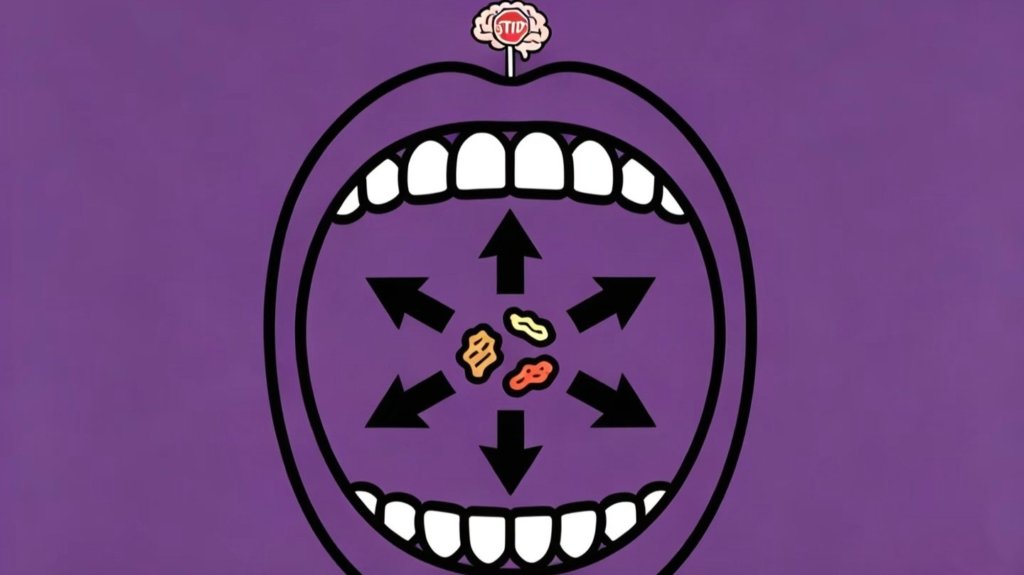
If you’ve ever tried to lose weight, you’ve probably noticed something troubling: the harder you try, the worse it seems to get. According to Dr. Judith Beck, author of The Beck Diet Solution, this cycle—often called the Restriction-Binge Cycle— affects nearly 85% of dieters. You restrict, you crave, you binge, you regret, and then you restart. This creates a psychological treadmill where your body and mind are constantly at war. The result? An unhealthy body paired with an unhealthy relationship with food. Research from the National Eating Disorders Association shows that repeated dieting attempts actually strengthen neural pathways associated with binge eating, making each cycle harder to break than the last. As Dr. Beck notes, “The diet itself becomes the problem.”
你是否曾注意到:越努力减肥,情况似乎越糟糕。根据《贝克饮食法》作者朱迪思·贝克博士的说法,这种被称为限制-暴食循环(Restriction-Binge Cycle)的模式影响着近85%的节食者。你限制自己,渴望就来了,然后暴饮暴食,接着后悔,再重新开始。这创造了一个心理跑步机,让你的身体和心灵不断交战。结果是什么?一个不健康的身体,加上对食物的扭曲关系。美国国家食药管理局的研究表明,反复节食实际上会强化与暴食相关的神经通路,让每一次循环都更难打破。正如贝克博士所说:”节食本身就成为了问题所在。”
Here’s the uncomfortable truth: almost everyone starts their weight loss journey by not eating. Less food, fewer calories, bigger deficit. But here’s the problem—this strategy targets the wrong thing. What diets actually shrink is your gastric capacity(胃容量), not your appetite. And here’s the catch: your stomach is remarkably adaptable. Studies published in the American Journal of Physiology demonstrate that the stomach can expand to accommodate increased food intake, sometimes even exceeding its original size. So while you’re white-knuckling through hunger pangs, your stomach is quietly recalibrating itself. You’ve essentially trained your body to require more food to feel satisfied. No wonder the weight keeps coming back.
这里有一个令人不安的事实:几乎所有人减肥的第一步都是——不吃。少吃,少摄入卡路里,更大的缺口。但问题在于——这个策略瞄准了错误的目标。节食真正缩小的其实是你的胃容量(gastric capacity),而不是食欲。关键在于:你的胃适应性极强。《美国生理学杂志》发表的一项研究表明,胃可以扩张以适应增加的食物摄入,有时甚至会超过原来的大小。所以当你在拼命忍受饥饿感时,你的胃正在悄悄重新校准自己。你实际上训练了你的身体需要更多的食物才能感到满足。难怪体重总是反弹。
The more you resist, the more you crave. This isn’t just willpower failing—it’s neuroscience. According to Dr. David Kessler, former FDA commissioner and author of The End of Overeating, the Cognitive Load(认知负荷) of constant food restriction literally drains your mental resources. When you’re constantly telling yourself “no, you can’t have that,” your brain’s prefrontal cortex—responsible for decision-making—becomes exhausted. Dr. Kessler’s research shows that this mental fatigue triggers a phenomenon called hedonic hunger, where your brain’s reward centers override your rational control. Simply put: willpower is a finite resource, and diets deplete it constantly. The harder you fight the urge, the more your brain convinces you that this specific food is essential for survival.
越抑制,越渴望。这不仅仅是意志力的问题——这是神经科学。前FDA局长、《暴食的终结》作者大卫·凯斯勒博士指出,持续的食物限制带来的认知负荷(Cognitive Load)会不断消耗你的心理资源。当你不断告诉自己”不,你不能吃那个”,负责决策的大脑前额叶皮层就会疲惫不堪。凯斯勒博士的研究表明,这种心理疲劳会触发一种叫做享乐性饥饿(hedonic hunger)的现象,大脑的奖励中枢会压倒理性控制。简单来说:意志力是一种有限资源,而节食会不断消耗它。你越努力对抗欲望,你的大脑就越能说服你这种特定的食物对生存至关重要。
So what’s the actual solution? It requires a complete mindset shift. The real goal isn’t shrinking your stomach-it’s reducing appetite at its source. Not the physical sensation of fullness, but the psychological obsession with food. Dr. Steven Gortmaker, professor at Harvard’s School of Public Health, emphasizes that sustainable weight management comes from changing your relationship with food, not just your calorie intake. His research on long-term weight loss success shows that individuals who practice intuitive eating-eating without rigid rules-are significantly more likely to maintain a stable weight over five years compared to those on traditional calorie-restricted diets. The paradox? True control comes from releasing control.
那么真正的解决方案是什么?这需要完全的心态转变。真正的目标不是缩小胃,而是从根本上减少食欲。不是身体上的饱腹感,而是对食物的心理执念。哈佛大学公共卫生学院的史蒂文·戈特马克博士强调,可持续的体重管理来自于改变你与食物的关系,而不仅仅是改变卡路里摄入。他关于长期减肥成功的研究表明,与传统限制卡路里的饮食相比,践行直觉饮食(intuitive eating)-不带刻板规则地进食-的人,在五年内保持体重稳定的能力明显更强。讽刺的是?真正的掌控来自于放开掌控。
Here’s the counterintuitive truth: when you give yourself permission to eat everything, the obsession naturally fades. Think about it-what do you crave most? Usually the foods you’ve forbidden yourself from enjoying. Dr. Brian Wansink, director of the Cornell Food and Brand Lab, calls this the Sensory-Specific Satiety(感官特异性饱腹感) effect. His experiments show that when people limit themselves to one type of food, satisfaction decreases faster, triggering the urge to eat more. But when all foods are equally available, the brain’s novelty-seeking mechanism calms down. There’s no”forbidden fruit” to chase. Once food loses its forbidden status, it simply becomes food. And that’s when the real magic happens-no guilt, no obsession, just nourishment.
这里有一个反直觉的真相:当你允许自己吃所有东西时,对食物的执念自然会消退。想一想-你最渴望的是什么?通常都是那些你禁止自己享受的食物。康奈尔大学食物与品牌实验室主任布莱恩·汪辛克博士称之为感官特异性饱腹感(Sensory-Specific Satiehy)效应。他的实验表明,当人们把自己限制在一种食物上时,满足感下降得更快,触发更多进食的冲动。但当所有食物都可以同等获取时,大脑的求新机制就会平静下来。没有”禁果”可追了。一旦食物失去了被禁止的地位,它就只是食物而已。而这才是真正神奇的时刻-没有愧疚,没有执念,只有滋养。
“But I can’t stop once I start!” This is probably the most common objection I hear. And it’s the wrong question. Instead of asking”How do I stop eating?”, ask”How do I stop wanting to eat?”There’s a crucial difference. Dr. Alice Gibbons, a behavioral psychologist at University College London, explains that the impulse to overeat is triggered before food enters your mouth-it’s a psychological craving, not a physical need. Forcing yourself to not eat is treating the symptom, not the cause. You can’t avoid eating forever. But you can change the mental framework around eating. The goal isn’t to resist food-it’s to make food less psychologically powerful. That’s sustainable. That’s real change.
“但我一旦开始就停不下来!”这可能是我听到的最常见的反对意见。而这恰恰是错误的问题。不要问”我怎样才能停止吃?”,而要问”我怎样才能停止想要吃?”这里有至关重要的区别。伦敦大学学院的行为心理学家爱丽丝·吉本斯博士解释说,过度进食的冲动是在食物入口之前就被触发的-这是一种心理渴望,不是身体需要。强迫自己不吃只是在治标不治本。你不可能永远不吃。但你可以改变进食的心理框架。目标不是抵抗食物-而是让食物在心理上变得不那么强大。这是可持续的。这是真正的改变。
Here’s my foolproof technique—ask yourself one question before eating: “What does this food actually taste like?” That’s it. Sweet?Salty? Crispy? Chewy? Your tongue is a sophisticated sensory tool designed to perceive flavor, and most of us have forgotten how to use it properly. Dr. Jean Kristeller, developer of Mindful Eating(正念饮食) programs, has conducted clinical trials showing that just 8 weeks of mindful eating practice can reduce binge episodes by 40%. When you consciously evaluate the taste of each bite, you activate the prefrontal cortex—your brain’s rational center—which temporarily interrupts the automatic eating response. You’re no longer eating on autopilot. You’re making a choice. And that moment of conscious choice? That’s where your power lies.
这是我的万无一失的技巧—在吃东西之前问自己一个问题:”这个食物到底是什么味道?”就这样。甜的?咸的?脆的?嚼劲的?你的舌头是一个精密的感官工具,用来感知味道,而我们大多数人都忘了如何正确使用它。正念饮食(Mindful Eating)项目开发者珍·克里斯特勒博士进行的临床试验表明,仅仅8周的正念饮食练习就能减少40%的暴食发作。当你有意识地评估每一口食物的味道时,你激活了前额叶皮层—大脑的理性中枢—这会暂时中断自动进食反应。你不再在自动驾驶模式下进食了。你在做选择。而那个有意识选择的时刻?正是你力量的所在。
After losing twenty pounds, I’ve come to understand one fundamental truth: the scale doesn’t measure your success—your sense of control does. When you can eat anything without obsession, when food is just food, you’ve won the real battle. Dr. Gortmaker’s longitudinal studies confirm that individuals who achieve this psychological freedom maintain their weight loss far more successfully than those who rely on constant vigilance and restriction. You don’t need a smaller stomach. You need a quieter mind. You don’t need more discipline. You need less desperation. Because the moment you stop fighting food, food stops fighting you back.
瘦了二十斤之后,我明白了一个基本真理:体重秤不能衡量你的成功——你的掌控感才是。当你能够不带执念地吃任何东西,当食物只是食物时,你就赢得了真正的战斗。戈特马克博士的纵向研究证实,那些达到这种心理自由的人,比那些依赖持续警惕和限制的人更成功地保持减肥成果。你不需要更小的胃。你需要更平静的心灵。你不需要更多的自律。你需要更少的绝望。因为你停止与食物战斗的那一刻,食物也就停止了反击。
“The diet itself becomes the problem.”
节食本身就成为了问题所在。
“True control comes from releasing control.”
真正的掌控来自于放开掌控。
“The moment you stop fighting food, food stops fighting you back.”
当你停止与食物战斗的那一刻,食物也就停止了反击。


