
一按耳道瞬间止嗝A finger in your ear a reset for your nerves
The One-Finger Trick to Rewire Your Nervous System
两秒钟。这是激活迷走神经唯一触及身体表面的分支所需的时间。你的打嗝不是问题。它们是一个症状——一个失控的反射弧,一个卡在重复模式的神经回路。而治疗方法不是喝水、吃糖,也不是有人突然从门后跳出来吓你。
Two seconds. That’s all it takes to activate the only branch of your vagus nerve that touches the surface of your body. Your hiccups are not the problem. They’re a symptom—of a reflex arc gone rogue, a neural loop stuck on repeat. And the cure isn’t water, sugar, or someone jumping out from behind a door.
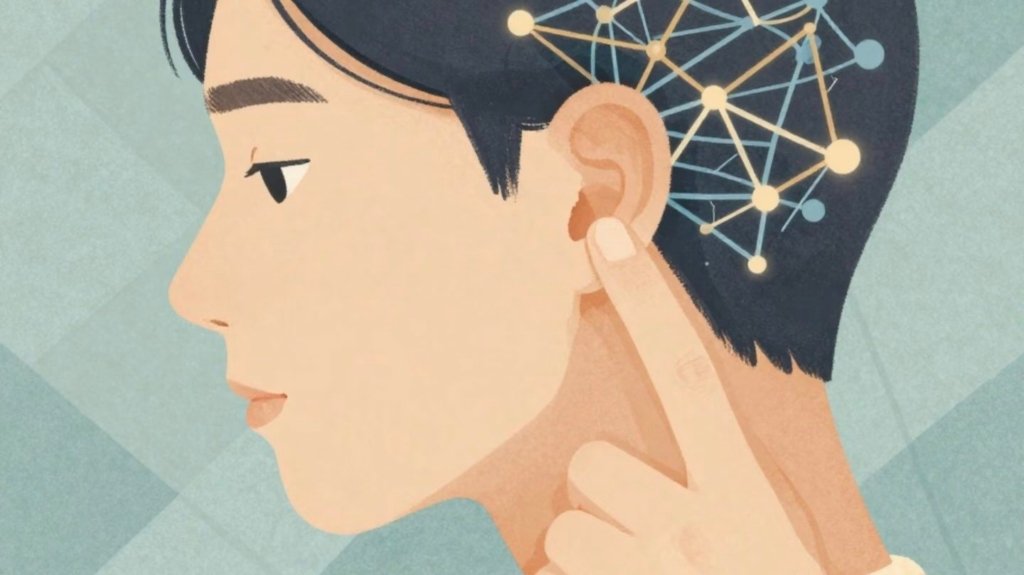
解决方法就是用你的食指,轻轻地按压耳道20秒。接下来将解释这种方法为何奏效,以及它将如何彻底改变你对自身身体的看法。
It’s your index finger, pressed gently into your ear canal for 20 seconds. Here’s why this works, and why it changes everything about how you should think about your own body.
说实话:你可能已经尝试了所有方法。你曾屏住呼吸直到视线模糊。你曾倒立着喝水。你曾让朋友“吓”你(但这从未奏效,只是雪上加霜)。
Let’s be honest: you’ve probably tried everything. You’ve held your breath until your vision blurred. You’ve drunk water upside down. You’ve let a friend “scare” you (which never actually works, it just adds insult to injury).
实际情况是:你的膈肌——肺部下方呈穹顶状的肌肉——正在不受控制地痉挛。信号来自一个反射弧,其中涉及你的膈神经、交感神经链,以及关键的迷走神经。
Here’s what’s actually happening: your diaphragm—the dome-shaped muscle beneath your lungs—is spasming uncontrollably. The signal comes from a reflex arc involving your phrenic nerve, your sympathetic chain, and crucially, your vagus nerve.
The vagus is the longest nerve in your body. It runs from your brainstem all the way down to your gut, controlling heart rate, digestion, inflammation, and mood. It’s your body’s chief brake pedal. And when hiccups strike, part of that reflex arc is stuck in overdrive.
迷走神经是你身体中最长的神经。它从你的脑干一直延伸到肠道,控制着心率、消化、炎症和情绪。它是你身体主要的“刹车踏板”。当打嗝发作时,这个反射弧的一部分就处于过度活跃状态。
Your hiccups aren’t random. They’re a neural glitch in your body’s most important nerve. And that nerve happens to be the one thing you can hack with a single finger.
你的打嗝并非随机发生。它们是你身体最重要神经中的一个神经故障。而这条神经恰好是你用一根手指就能“破解”的关键。
Here’s the part that sounds like pseudoscience but is actually pure anatomy: the vagus nerve has a branch called the auricular branch (Arnold’s nerve). It’s the only vagal branch that reaches the body’s surface. It terminates right inside your ear canal.
这一点听起来像伪科学,但实际上是纯粹的解剖学:迷走神经有一个分支叫做耳廓支(阿诺德神经)。它是唯一触及身体表面的迷走神经分支,终点就在你的耳道内。
When you press gently on the tragus—that little cartilage flap at the entrance of your ear—or insert your fingertip just slightly into the canal, you’re physically stimulating that nerve ending. The vagus sends a signal upstream to your brainstem: “Hey, we’re getting sensory input down here.”
当你轻轻按压耳屏——耳道入口处的小软骨瓣——或将指尖稍微插入耳道时,你就在物理性地刺激那个神经末梢。迷走神经会向上游向你的脑干发送信号:“嘿,我们这里正在接收感官输入。”
That signal interrupts the hiccup reflex arc at its neural source. The spasms reset. The diaphragm relaxes. No water. No sugar. No awkward breath-holding. Just 20 seconds of pressure.
那个信号在神经源头处中断了打嗝反射弧。痉挛停止,膈肌放松。不需要水,不需要糖,也不需要尴尬地屏住呼吸。只需20秒的按压。
Most people spend years trying to solve their problems externally. They reach for the next water bottle trick, the next hack, the next quick fix. But the most powerful solutions often involve understanding your own architecture—then applying the minimal effective dose.
多数人花费数年时间试图从外部解决问题。他们不断寻找下一个喝水小技巧、下一个窍门、下一个快速解决方案。然而,最强大的解决方案往往涉及理解自身结构,然后应用最小的有效剂量。
The vagus nerve doesn’t just control hiccups. Research from institutions like WashU Medicine and Feinstein Institutes shows that vagus nerve stimulation (VNS) has been used to treat severe depression, reduce anxiety, manage PTSD, and lower inflammation. A 2024 clinical trial involving nearly 500 participants found that VNS therapy significantly improved treatment-resistant depressive symptoms.
迷走神经不仅控制着打嗝。来自华盛顿大学医学院和费因斯坦医学研究所等机构的研究表明,迷走神经刺激(VNS)已被用于治疗严重抑郁症、减轻焦虑、管理创伤后应激障碍(PTSD)和降低炎症。一项涉及近500名参与者的2024年临床试验发现,VNS疗法在一年后显著改善了难治性抑郁症症状。
The same nerve. The same principle. In the next 24 hours: Try the finger-in-ear technique the next time you hiccup. Press gently (not painfully) into the ear canal opening for 20 seconds. Observe what happens. Most people feel the hiccups stop within 10 seconds.
同样的神经。同样的原理。在接下来的24小时内:当你下次打嗝时,尝试食指入耳技巧。轻轻地(不要疼痛地)按压耳道开口20秒。观察发生了什么。大多数人会在10秒内感觉到打嗝停止。
In the next 7 days: Explore non-invasive vagus nerve stimulation methods. Cold water on your face activates the “mammalian dive reflex” (also vagus-mediated). Slow, deep exhales (longer exhales than inhales) stimulate vagal tone. Humming or gargling vibrates the vagus through the pharynx.
在接下来的7天内:探索非侵入性迷走神经刺激方法。冷水敷脸可激活“哺乳动物潜水反射”(同样由迷走神经介导)。缓慢、深长的呼气(呼气时间长于吸气)能刺激迷走神经张力。哼唱或漱口通过咽部震动迷走神经。
In the next 30 days: Read about the RECOVER trial and how VNS is being studied for treatment-resistant depression. Consider this: if stimulating one nerve can reset a hiccup reflex, what else in your life might be one gentle intervention away from resetting?
在接下来的30天内:阅读有关RECOVER试验以及VNS如何被研究用于治疗难治性抑郁症的资料。思考一下:如果刺激一根神经就能重置打嗝反射,那么你生活中还有什么可能只需一次温和的干预就能重置呢?
You don’t need to be fixed. You need to be unlocked. Your body already has the architecture for self-regulation. The vagus nerve is proof—a single nerve pathway that runs from your ear canal to your gut, touching your heart, lungs, and brain along the way.
你不需要被“修复”。你需要被“解锁”。你的身体本身就拥有自我调节的构造。迷走神经就是证明——这是一条单一的神经通路,从你的耳道延伸到肠道,途中触及你的心脏、肺部和大脑。
The hack for hiccups is just the appetizer. The real dish is realizing that your nervous system came designed with reset buttons. You just have to know where to press.
治疗打嗝的技巧只是开胃菜。真正的大餐是认识到你的神经系统本身就带有重置按钮。你只需知道在哪里按下即可。


