
社交媒体与社交生活截然相反Social Media is the Opposite of Social Life
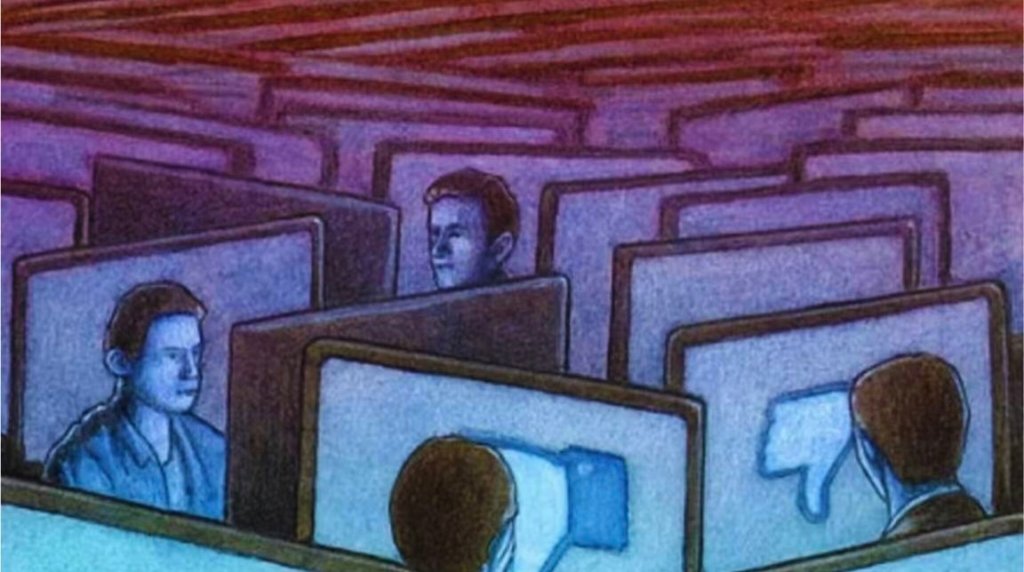
I remember a surreal moment about twenty years ago, which felt like the beginning of something bad, and it was.
我记得大约二十年前的一个怪诞瞬间。那时,我感觉到某种糟糕的事情正在拉开序幕,事实证明,直觉是对的。
I was at a bowling alley with some friends, and a few people in our group were talking about Facebook. I knew what it was but had no interest in it. Then one of them turned to me and said, “There’s lots of pictures of you on Facebook!”
当时我和几个朋友在保龄球馆,其中有几个人在聊脸书。我知道那是什么,但毫无兴趣。这时,其中一个朋友转向我说:“脸书上有很多你的照片!”
This kind of stunned me and I didn’t know what to say. I hadn’t joined this website but somehow I was one of its features.
这让我有点震惊,不知该说什么。我没有注册这个网站,却莫名其妙地为它贡献了内容。
A year later all of us were using it. It was exciting at first, because it seemed to give us more access to the people in our lives. We could post photos, make plans, and stay connected to a wider circle of people.
一年后,我们所有人都在用脸书了。起初很兴奋,因为它似乎让我们更能融入彼此的生活。我们可以发照片、做计划、与更广的圈子保持联系。
I should note for younger readers that the term “people” at that time only referred to real, physical beings: persons with bodies that walked and drove around and did things. Having friends largely meant physically traveling to the same apartment, bowling alley, restaurant, or movie theater, positioning our bodies amongst each other in this physical space, and interacting using our faces and voices and hearts. The part of your life that consisted of this type of physical activity was called social life.
这里需要跟年轻读者说明一下:那时候,“朋友”这个词只指代真实的、有血有肉的人,那些会走路、开车、会做各种事情的人。交朋友基本上意味着你要亲自去到某个公寓、保龄球馆、餐厅或电影院,大家的身体处在同一个物理空间里,用表情、声音和真心去互动。那种由实实在在的身体活动构成的生活,才叫社交生活。
Social media was meant to facilitate this thing called social life. Facebook’s original purpose was to keep you in touch with people who would otherwise fall out of your social circle, namely people you went to school with.
社交媒体本意是为这种“社交生活”提供便利的。脸书最初的目的是帮你与那些原本会淡出你社交圈的人保持联系,比如你的同学。
It didn’t really do that. It mostly became a thing to do on your computer by yourself. Within a few years, social media came to be seen as a sort of processed-food version of social life: convenient, low-quality sustenance that should not make up most of your diet. It still seemed like food though, just crappy food.
但它并没有真正实现这个目的。它更多变成了你自己坐在电脑前独自消磨时间的事情。没过几年,社交媒体就被视为一种社交生活的“加工食品”:方便、营养低质,不应该成为你日常的主要部分。不过它看起来还像是食物,只是垃圾食品而已。
I’ve been complaining about social media forever by this point, and so has everyone else. But a recent effort to actively rebuild my social life has revealed something about how these two things relate. Social media isn’t a cheap and inadequate facsimile of social life; it’s its exact opposite. It isn’t worse than social life at fostering personal connection, it undoes personal connection and reverses our social skills.
到这个时候,我已经抱怨社交媒体很久了,其他人也一样。但最近我试着主动重建自己的社交生活,这才真正看清了两者之间的关系。社交媒体不是社交生活的廉价又劣质的仿制品,它恰恰是社交生活的反面。它并非在促进人际连接上逊色于现实生活,而是在拆解这种连接,并让我们的社交技能全面退化。
This is because social media doesn’t really allow you to interact with people. People are living beings with beating hearts and live emotions. Social life has always been about engaging in the immediate physical presence of such beings. Social media avoids exactly that part, while allowing you to exchange information and symbols of approval.
这是因为社交媒体并不允许你真正与人互动。人是活生生的存在,有心跳,有真实的情感。社交生活从来都是在他人当下的、真实的场景中进行的。而社交媒体恰恰绕过了这一点,只允许你交换信息和点赞之类的符号。
In a real social interaction, you’re entangled with the other person, physically and emotionally, in real time. Eyes are looking, faces are expressing, and emotions are humming, one hundred percent of the time. It’s nothing like browsing content or sending off messages — it’s much more akin to riding a horse.
在真实的社交互动中,你与对方是交织在一起的——身体上、情感上,实时地。眼睛在注视,表情在变化,情绪在流动,百分之百的时间都是如此。这跟刷内容或发消息完全不同,真实的社交互动更像是骑马。
Moment-to-moment care is required. It can take you to all kinds of new places, but it has its hazards. You have to stay alert, watch your footing, and keep your heart open to this other living thing you’re entangled with. Doing it badly can lead to a nasty upset or even physical danger.
你需要时刻留意,稍有不慎就可能出问题。它能带你到各种新地方,但也伴随着风险。你必须保持警觉,注意脚下,对与你互动的这个鲜活生命体敞开心扉。做得不好,可能会让你狼狈不堪,甚至陷入人身危险。
Online, you don’t interact with living beings. You interact with filtered bits of data issued by unseen, presumably living beings – messages, pictures, links, memes. Each party communicates like a paranoid medieval king, who sends out heralds to convey his latest position, then raises the drawbridge again.
而在网上,你并不是在与活生生的人互动。你面对的是被过滤的、来自某个看不见的、大概是活着的人的数据碎片:消息、图片、链接、表情包。每个人都像多疑的中世纪国王一样:派出使者传达最新的立场,然后立刻把吊桥收回来。
Real interaction isn’t information exchange. It involves performing a host of specific, right-brained skills, all at once – how to get someone’s attention in a way agreeable to them, how to explore their preferred topic, how to take offense gracefully, where to put your eyes and your body, how to know when to unpack and when to summarize, and a lot more.
真实的互动不是信息交换。它需要你同时调动一系列微妙的、右脑主导的技能:如何以对方能接受的方式引起注意,如何探索对方感兴趣的话题,如何得体地接受冒犯,眼睛和身体该放在哪里,何时展开、何时收尾,等等。
It all must be done live, with an audience. The human being is built for this sort of thing, but it still has to be learned by doing. The voice, face, body, and heart can work together the way a competent driver’s hands, feet, and eyes operate the steering wheel, gas pedal, turn signal, and mirror as though they’re one. When it’s really clicking, it’s a beautiful thing.
这一切都必须现场完成,而且有观众在场。人类天生就具备做这些事的能力,但仍然需要通过实践来学习。声音、表情、身体和心灵可以协同工作,就像一个熟练的司机的手、脚、眼睛能行云流水地操控方向盘、油门、转向灯和后视镜一样。一切真正流畅运转是一件非常美妙的事情。
And none of it resembles in any way what you do when you thumb through an app. Social media is just a kind of solitary data processing game. You can exchange information while staying safe from the delicate challenges of real interaction. You can issue your opinions without the heat of real eyes looking at you. You can feel heard, and engage with “the world,” without ever having to account for the immediate presence of another person’s heart.
而你在刷手机时所做的任何事,都与这一切毫无相似之处。社交媒体本质上是一种孤独的数据处理游戏。你可以在远离真实互动的微妙挑战的情况下与对方交换信息。你可以发表观点,而不用承受别人真实目光带来的灼热。你可以感到自己被倾听、与“世界”互动,却从来不需要面对另一个人近在咫尺的心跳。
I think that’s why social media remains somewhat irresistible to many of us. The human being has powerful cravings for certain social rewards – approval, status, reassurance — but would like to have them without the hazards of real social life. Mucking up a real interaction is painful, and if your skills are poor, improving them is a major trial. Social media walls off all that trouble, while allowing some of the low-level rewards to come through, in the form of likes, stars, hearts, and other fake internet points. You can enjoy these scraps of approval while the wall shields you from the heat and danger of real-time entanglement with another human being.
我想这就是为什么社交媒体对我们许多人来说仍然难以抗拒。人类对某些社交回报:认可、地位、安慰,有着强烈的渴望,但又希望不用承受真实社交生活中的风险。搞砸一次真实的互动是很痛苦的,而如果你的社交技能本身就不够好,想要提升它们更是一场艰难的考验。社交媒体把这些麻烦统统挡在墙外,只让一些低级奖励以点赞、星星、爱心或其他虚假网络积分的形式流落进来。你可以享用这些认可的小碎片,同时让那堵墙保护你免受与他人实时交织带来的灼热与危险。
These platforms now offer filters to make sure only the agreeable bits of other people come through. If someone gets annoying, you can mute them. You can filter out messages containing particular words. The algorithm will learn your intolerances, and show you only the parts of others that require less of your empathy and understanding. It’s no wonder that many people pride themselves on having zero tolerance for differences of political opinion — that degree of intolerance is actually possible now.
这些平台现在还提供了各种过滤功能,确保只有别人身上让你舒服的部分能传给你。如果有人让你烦了,你可以屏蔽他。你可以过滤掉包含特定词语的消息。算法会学习你的不忍受,只向你展示那些不需要你动用太多共情和理解力的他人的侧面。难怪现在很多人以“对政治观点分歧零容忍”为傲。这种程度的“零容忍”,在今天确实成为可能了。


